How to Grow Strawberry Banana Weed Strain

Quick Summary: The Strawberry Banana strain is a 70/30 indica-dominant hybrid (Banana Kush x Bubble Gum) renowned for a 17-23% THC range and massive resin production. Ideal for concentrates, it flourishes in temperate climates with strict NPK management and high-intensity PAR lighting during its 8-10 week flowering window.
Technical Profile: What Strain is Strawberry Banana?
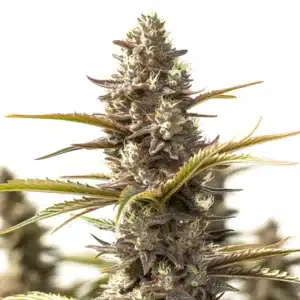
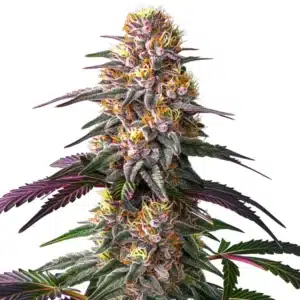
The Strawberry Banana cannabis strain is a genetic masterpiece resulting from the cross-breeding of Crockett’s Banana Kush and the “Strawberry” phenotype of Serious Seeds’ Bubble Gum. Biologically, this cultivar is a heavy-hitting indica-dominant hybrid, typically exhibiting a 70% indica and 30% sativa distribution. This specific genetic lineage dictates its unique physiological development, characterized by a squat, bushy morphology and remarkably dense internodal spacing.
Recommended Strains
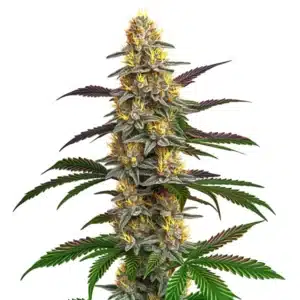
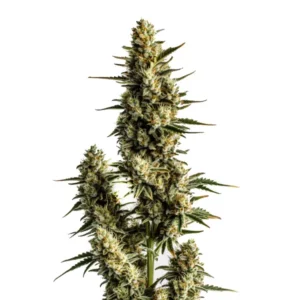
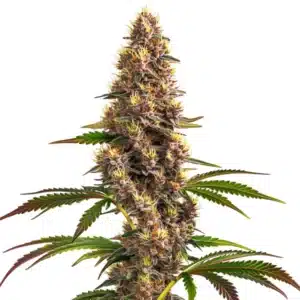
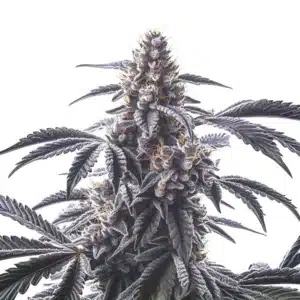
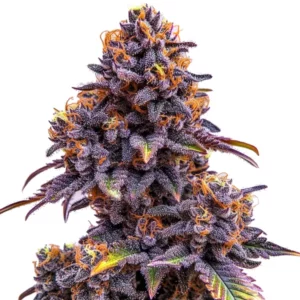
Strawberry Banana

|
THC | 17% - 23% (Medium) |

|
Type | Feminized |

|
Yield | Medium |

|
Phenotype | 70% Indica / 30% Sativa |
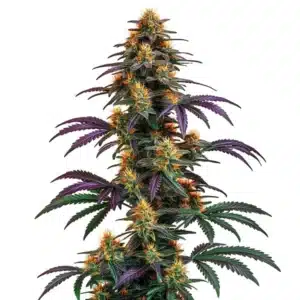
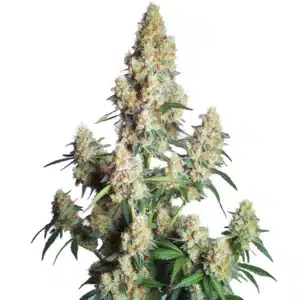
Strawberry Banana Cheese
|
|
THC | 20% - 22% (Medium) |
|
|
Type | Feminized |
|
|
Yield | Medium |
|
|
Phenotype | 60% Indica / 40% Sativa |
From a chemical perspective, the strawberry banana weed strain is a terpene powerhouse. It is dominated by Myrcene, Limonene, and Caryophyllene. These compounds work in synergy through the “Entourage Effect,” where the sedating properties of Myrcene are modulated by the mood-elevating effects of Limonene. For the cultivator, this means the plant emits a pungent, tropical aroma that requires high-efficiency carbon filtration to manage VOC (Volatile Organic Compound) levels in indoor environments.
Promos & Deals

Environmental Parameters: PAR, PPFD, and VPD Management
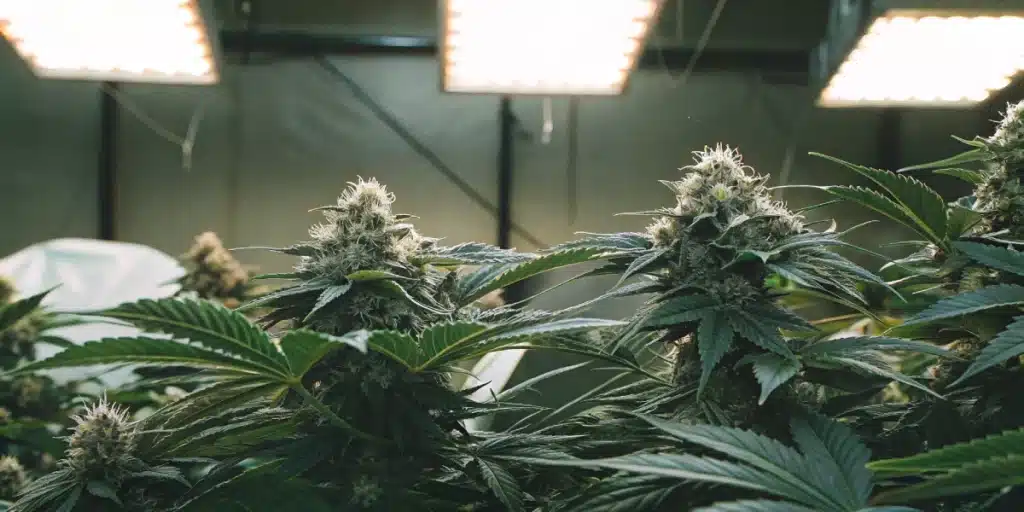
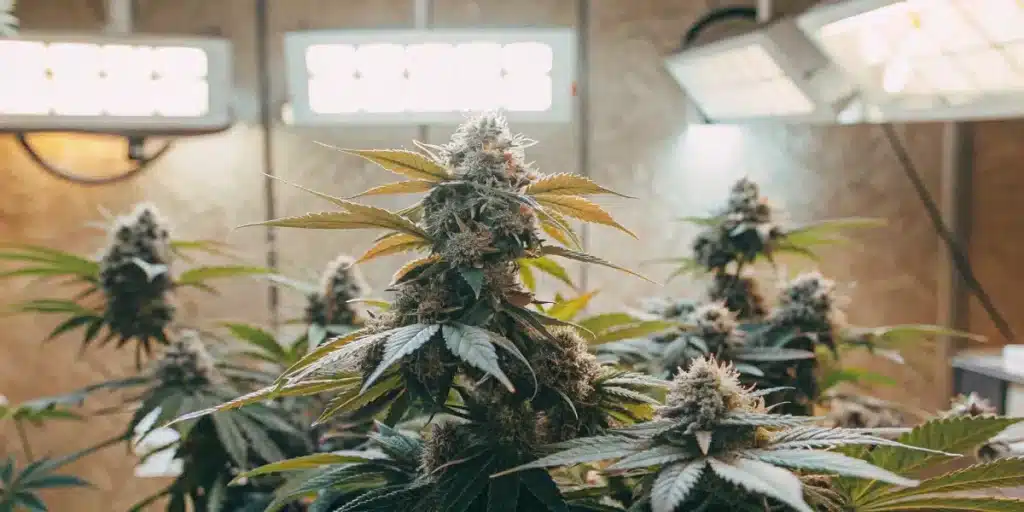
Cultivating strawberry banana cannabis requires more than just “sunlight.” To hit peak THC levels of 23%, indoor growers must target a PPFD (Photosynthetic Photon Flux Density) of 600–900 µmol/m²/s during the flowering stage. Without supplemental CO2 enrichment, exceeding 1000 µmol/m²/s can lead to photo-inhibition. Maintaining a DLI (Daily Light Integral) of approximately 30–40 mol/m²/d ensures the plant has sufficient photonic energy to drive the heavy resin synthesis this strain is known for.
Vapor Pressure Deficit (VPD) is the critical metric for strawberry banana strain grow info. During the vegetative phase, aim for a VPD of 0.8–1.1 kPa to facilitate rapid nutrient uptake. As the plant transitions into late bloom, the VPD should be increased to 1.2–1.5 kPa. This technical shift forces the plant to protect its reproductive organs (the buds) by increasing trichome density, which acts as a biological shield against desiccation, effectively “sweating” out the resin that makes strawberry banana seeds so valuable to extractors.
Technical Comparison: Strawnana vs. Genetic Competitors
| Feature | Strawberry Banana | Banana Kush | Bubblegum |
|---|---|---|---|
| Genotype | 70% Indica / 30% Sativa | 60% Indica / 40% Sativa | 50% Indica / 50% Hybrid |
| Flowering Time | 56 – 70 Days | 49 – 63 Days | 56 – 63 Days |
| Primary Terpene | Myrcene (Sedative) | Limonene (Elevating) | Caryophyllene (Spicy) |
| Resin Density | Extreme (Capitate-Stalked) | High | Medium-High |
| Avg. THC % | 17% – 23% | 15% – 20% | 13% – 19% |
| Nutrient Profile | High PK in Mid-Flower | Standard NPK | Heavy Nitrogen in Veg |
Nutritional Protocol and NPK Optimization
The strawberry banana marijuana strain is a “heavy feeder” during its mid-flowering transition. During the vegetative stage, maintain an NPK ratio of 3-1-2 to support the rapid development of large fan leaves. These leaves act as the plant’s primary solar panels. However, a common mistake is keeping Nitrogen levels too high during the first three weeks of bloom, which can lead to “clawing” and delayed floral onset.
Transitioning to a 1-3-2 ratio during weeks 4–6 is vital. The strawberry banana weed response to increased Phosphorus and Potassium (P-K) is explosive, directly impacting the size of the calyxes. In the final two weeks, a 0-0-1 ratio or a total flush with 6.0 pH water is recommended. This triggers “senescence,” a biological process where the plant breaks down stored chlorophyll and starches into simple sugars, significantly improving the flavor profile and ensuring the “strawberry” notes are not masked by chemical harshness.
Elite Pest and Disease Control Protocol
Because strawberry banana cannabis strain produces such dense, resinous buds, it is naturally susceptible to Botrytis cinerea (Gray Mold) and Erysiphe diffusa (Powdery Mildew). Prevention must be systemic. An elite protocol includes a bi-weekly foliar application of Bacillus amyloliquefaciens during veg to establish a microbial barrier on the leaf surface.
For insect management, the high resin content of the strawberry banana strain can actually trap small pests like fungus gnats, but Spider Mites (Tetranychus urticae) remain a threat. Professionals utilize “IPM” (Integrated Pest Management) by introducing predatory mites like Amblyseius andersoni early in the cycle. If an outbreak occurs during flowering, avoid oils that ruin the resin; instead, use localized UVC light treatments or high-pressure air to disrupt mite colonies without contaminating the trichomes.
Professional Tips from 10-Year Master Growers
- Stem Calcification: Use supplemental Silica (monosilicic acid) from day one. Strawnana’s buds are so heavy they often snap branches; silica strengthens the cell walls, allowing the plant to support the weight naturally.
- Cold Shocking: In the final 48 hours before harvest, drop nighttime temperatures to 55°F (13°C). This stresses the plant into a final “terpene dump,” often resulting in purple hues and a more intense aroma.
- Apical Dominance: Strawnana responds better to “FIMing” than traditional topping. Leaving that 10% of the growth tip creates a “crown” of 4-6 main colas rather than just two, maximizing the canopy’s PAR absorption.
- The 60/60 Rule: For the ultimate cure, dry your strawberry banana at exactly 60°F and 60% humidity for 14 days. This slow moisture loss prevents the “hay smell” by allowing the gradual breakdown of chlorophyll.
- Trichome Monitoring: Don’t just look for “cloudy.” For this strain, wait for 15% amber on the *calyxes* (not the sugar leaves). This ensures the peak conversion of CBGA to THC.
What is the THC content of Strawberry Banana Weed Strain?
The strawberry banana strain effects are driven by a high THC concentration, typically ranging between 17% and 23%. In laboratory settings with optimized PPFD and CO2 levels, some phenotypes have tested as high as 26%. This makes it a potent option for experienced users, while its low CBD content (under 0.1%) ensures the psychoactive experience is focused and cerebral before transitioning into a deep body relaxation.
Is this strain suitable for beginners?
Yes, strawberry banana seeds are highly recommended for beginners because the plant is geographically resilient. It can handle minor fluctuations in NPK ratios without immediately showing signs of nutrient lockout. However, its rapid growth during the vegetative phase requires the grower to learn basic training techniques (LST) to prevent the plant from outgrowing indoor spaces.
Is the Strawberry Banana strain indica or sativa?
The strawberry banana hybrid is categorized as an indica-dominant strain (70% Indica / 30% Sativa). While the Sativa heritage provides an initial euphoric lift, the dominant genetic traits lead to a heavy, relaxing finish. This makes it an ideal choice for evening use or for managing symptoms like chronic pain and insomnia.
What flavors can I expect from the Strawberry Banana cannabis strain?
Expect a complex sensory profile that lives up to its name. The initial inhale is characterized by creamy, sugary banana notes, while the exhale reveals an earthy, berry-like finish. These flavors are a direct result of its unique terpene concentration, specifically the high levels of Myrcene mixed with the sweetness provided by its Bubble Gum parentage.
What medical benefits does Strawberry Banana offer?
Medical patients often turn to the strawberry banana marijuana strain for its potent analgesic and sedative properties. It is highly effective for treating chronic stress, appetite loss, and physical tension. The “creeper” effect of its indica dominance provides long-lasting relief from muscle spasms and is a staple for those seeking a natural alternative for sleep management.