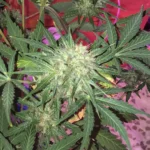
How to Grow Blackberry Kush

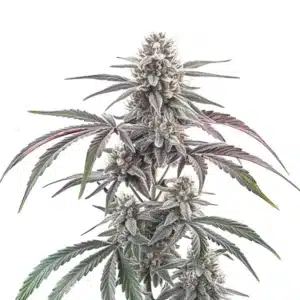
Blackberry Kush earns its reputation the honest way: dense indica buds, a berry-and-earth flavor that tastes exactly like the name promises, and a trophy from the Cannabis Cup 2017 to back it all up. The cross of Afghani and Blackberry sits at 80% indica, stays a manageable 4.92 ft tall, and finishes flowering in 8-10 weeks, which makes it one of the more forgiving award winners you can run at home.
This guide covers the full cycle for the Blackberry Kush strain from Blimburn Seeds: germination, the vegetative stretch, the 12/12 flip, feeding, and how to dry those resinous buds so the berry sweetness survives the jar. Everything below reflects the official datasheet, so you can plan your tent or garden around real numbers instead of forum guesses.
Recommended Strains

Blackberry Kush

|
THC | 16% - 20% (Medium) |

|
Type | Feminized |

|
Yield | High |

|
Phenotype | 80% Indica / 20% Sativa |

Alaskan Purple
|
|
THC | 15% - 20% (Medium) |
|
|
Type | Feminized |
|
|
Yield | Medium |
|
|
Phenotype | 70% Indica / 30% Sativa |
Blackberry Kush at a Glance
Before you germinate anything, get familiar with what this cultivar actually does. The table below condenses the official figures.
| Trait | Blackberry Kush |
|---|---|
| Lineage | Afghani x Blackberry |
| Type | Feminized photoperiod |
| Award | Winner: Cannabis Cup 2017 |
| Phenotype | 80% Indica / 20% Sativa |
| THC | 16-20% (medium) |
| Flowering time | 8-10 weeks |
| Height | 4.92 ft (1.5 m) |
| Yield indoor | 1.64 oz/ft² (500 g/m²) |
| Yield outdoor | 17.64-21.16 oz (500-600 g) per plant |
| Outdoor harvest | October |
| Climate | Dry and warm |
| Effects | Deeply soothing, happy, relaxed |
| Flavors | Berry, earthy, sweet |
Two numbers deserve a second look. The 16-20% THC range lands in medium territory, strong enough for an unmistakable evening effect without overwhelming anyone who paces themselves. And the outdoor yield of 17.64-21.16 oz per plant is genuinely generous for a plant that tops out at 1.5 m, a ratio few compact indicas match.
Promos & Deals
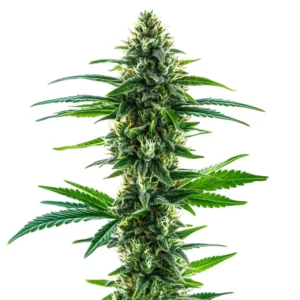
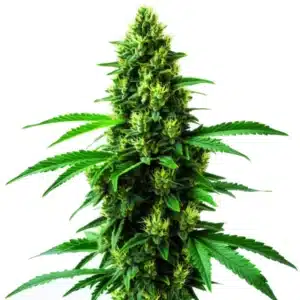
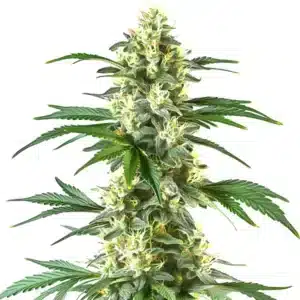
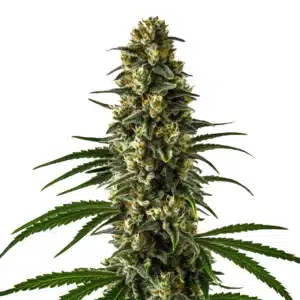
Why Blackberry Kush Won the Cannabis Cup 2017
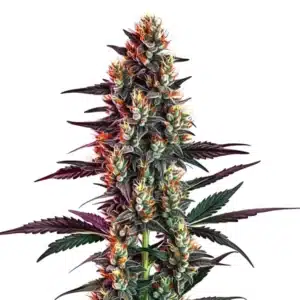
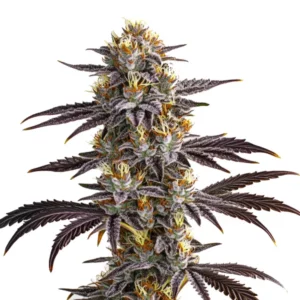
Awards in this industry get handed out for a reason, and in 2017 the Cannabis Cup judges rewarded exactly what growers still praise today: bag appeal and flavor fidelity. Blackberry Kush produces chunky, trichome-heavy colas where dark hues can peek through the frost, and the berry-sweet terpene profile carries from the live plant through the cure. That combination of looks and taste is what separates a cup winner from a merely good indica, and it puts this cultivar in the same company as the rest of the award-winning cannabis seeds in the Blimburn Seeds catalog.
The pedigree helps explain it. Afghani supplies the dense structure, heavy resin, and earthy backbone that define classic kush strains, while the Blackberry parent layers sweet, dark-fruit top notes over that foundation. The genetics proved influential enough that Blimburn Seeds later used a male Blackberry Kush to breed Blackberry Moonrocks, a separate, far more potent cross. Do not confuse the two: the guide you are reading covers the original cup winner.
For you as a grower, the award translates into a practical promise. If your buds come out loose, pale, or flat-tasting, the problem is in your environment or your timing, not the seed, and this guide exists to close that gap.
Germination and the Vegetative Phase
Start your seeds with the paper-towel method at 70-79°F. Place them between damp paper towels on a plate, cover, and keep them dark; healthy taproots usually show within 24-120 hours. Once a taproot reaches about half an inch, move each seed into a small pot of light, airy soil, taproot down, no deeper than a knuckle.
Because these are feminized seeds, every plant that sprouts will flower as a female, so there are no males to identify and remove. Give seedlings 18 hours of light per day and transplant up in stages, finishing in 3-5 gallon containers indoors or 15+ gallon containers outside. During the 4-8 week vegetative phase, Blackberry Kush builds a sturdy, bushy frame with tight internodal spacing, typical of its Afghani side.
That bushy habit is your cue for training. Top the plant once above the fourth or fifth node to break apical dominance, then use low-stress training to spread the main branches outward. A flat, open canopy lets light reach every future bud site, which matters on a plant this dense. A light defoliation at the end of veg keeps air moving through the middle of the plant.
Growing Blackberry Kush Indoors
Indoors, this cultivar is tailor-made for tents. At a finished height of 1.5 m it fits under standard ceilings even after the modest flowering stretch, and its 8-10 week bloom keeps the electricity bill reasonable. Run the vegetative phase at 18/6, then flip to 12/12 when plants reach roughly half their target height; expect them to stretch 50-80% after the switch.
Keep temperatures between 68-81°F with lights on, and hold relative humidity near 50-60% in veg before dropping to 40-45% once flowers form. The dry side of that range is where this strain feels at home, and the dense bud structure will thank you for it: moisture trapped inside fat indica colas is the fastest route to botrytis. A steady oscillating fan and a properly sized exhaust do more for your final quality than any bottled additive.
Worked well, 1.64 oz/ft² (500 g/m²) is a realistic target. A ScrOG net suits it beautifully, since the plant naturally throws thick side branches that fill a screen fast.
Growing Blackberry Kush Outdoors
Outside, Blackberry Kush wants the climate its Afghani ancestor evolved in: dry and warm. Growers in arid or Mediterranean-type regions, think inland California, Arizona, southern Spain, will see the best of it, because low late-season humidity protects those dense colas during the critical final weeks. In damp coastal areas it can still perform, but you will need wider spacing, aggressive airflow, and a close eye on September rain.
Plant after the last frost in full sun, in soil enriched with compost and perlite for drainage. The compact 1.5 m frame is easy to keep discreet behind a fence and simple to cover if weather turns. Harvest lands in October, and each plant can hand you 17.64-21.16 oz (500-600 g) of dried flower, a generous return for such a tidy silhouette. Support the main colas with stakes in the last month; they gain weight faster than the branches thicken.
Feeding and Watering
Blackberry Kush has the solid feeding drive you would expect from a resin-heavy indica, but it is not a nutrient hog. Start light and read the leaves.
| Stage | EC | pH | Notes |
|---|---|---|---|
| Seedling | 0.4-0.6 | 6.0-6.5 | Plain water or quarter-strength feed |
| Vegetative | 0.8-1.2 | 6.0-6.5 | Nitrogen-forward, add silica for stems |
| Preflower | 1.2-1.4 | 6.0-6.5 | Transition formula at the 12/12 flip |
| Bloom | 1.4-1.6 | 6.0-6.5 | Phosphorus and potassium forward |
| Flush | 0.0-0.4 | 6.0-6.5 | Final 10-14 days, plain water |
Water when the top inch of medium is dry, and let pots get noticeably light between waterings; kush genetics tolerate a brief dry-back far better than soggy roots. Magnesium hunger sometimes shows mid-bloom as interveinal yellowing on older fan leaves, and a dose of cal-mag corrects it quickly.
In the last two weeks, drop the EC to 0.0-0.4 and run plain water. A clean finish lets the berry-sweet terpenes speak without a harsh mineral edge.
Flavor, Terpenes, and Effects of Blackberry Kush
The flavor is a three-layer affair: ripe berry up front, honest earth underneath, and a sweet finish that lingers. Six terpenes in the official profile do most of that work. Myrcene supplies the ripe, musky fruit base, and farnesene adds a green, orchard-fruit brightness that keeps the berry note from turning heavy. Caryophyllene and humulene build the earthy, lightly spiced foundation you expect from anything with Afghani blood, while borneol brings a cool herbal undertone and eugenol a warm, clove-like sweetness that rounds out the exhale.
A supporting cast of pinene, cedrene, cadinene, camphene, citral, and fenchol fills in the aromatic edges without taking the lead. The effect profile matches the indica pedigree: deeply soothing through the body, happy and relaxed in mood, arriving smoothly rather than all at once. With 16-20% THC it is an evening companion that lets you stay present, well suited to winding down a day without losing the thread of a conversation or a film.
Harvesting, Drying, and Curing
Watch the trichomes from week 7 of flowering onward. Harvest when most have turned cloudy with the first 10-20% shifting amber; that window captures the soothing body character at its best. Milky-dominant trichomes give a slightly brighter effect, while more amber deepens the heaviness.
Dry whole branches upside down for 7-14 days at 59-68°F and 50-55% humidity, in the dark with gentle air movement. Dense buds like these dry from the outside in, so resist the urge to rush: stems should snap, not bend, before anything goes into a jar. Then cure in glass, burping daily for the first two weeks. Give it three to four weeks total and the berry sweetness comes forward dramatically.
What to Do With Your Trim
The sugar leaves on this cultivar carry serious resin, so do not toss them. Dry-sift them over a screen for kief, freeze them for bubble hash, or simmer them into infused butter for edibles. A cup winner’s trim is better raw material than many strains’ buds.

Common Problems and Pro Tips
Blackberry Kush is an award-winning, forgiving grow, but it is a dense 80% indica that likes it dry, so airflow and a careful cure come first.
- Watch the humidity: as an 80% indica from a dry, warm background its buds are dense, so keep flowering humidity down and run a fan to prevent bud rot.
- Open up the canopy: it grows bushy at around 1.5 m, so defoliate lightly to get light and air to the lower buds and keep ripening even.
- Protect the berry aroma: its ripe-berry character is delicate, so avoid rough handling and heat, and cure slowly so that flavour survives drying and curing.
Expert tip: this Cannabis Cup winner is prized for berry flavour that holds up through the cure. A slow dry and a careful cure protect that ripe-berry character over its earthy base after harvest.
Frequently Asked Questions
Is Blackberry Kush indica or sativa?
It is strongly indica dominant: 80% indica to 20% sativa, bred from Afghani and Blackberry. The structure, flowering speed and deeply soothing effect all follow that indica lead, which also means dense buds, so keep humidity down and air moving through the canopy as the plant fills out.
How long does Blackberry Kush take to flower?
Indoors it finishes in 8 to 10 weeks after the switch to a 12/12 light schedule. Outdoors, plants are ready to harvest in October in the northern hemisphere. Its dense buds like a drier climate, so keep humidity down and a fan moving air through the canopy across that window.
What awards has Blackberry Kush won?
This cultivar is a Cannabis Cup 2017 winner, recognized for its combination of dense, resin-coated flowers and a faithful berry-sweet flavor that survives drying and curing. That pedigree reflects how consistent and flavourful it grows out, which is a big part of why it stays sought after.
What does Blackberry Kush taste like?
Expect ripe berry over an earthy base with a sweet finish. Myrcene, farnesene, caryophyllene, humulene, borneol and eugenol lead the terpene profile. That berry character is delicate, so dry slowly in a cool, dark space and cure in jars so it survives drying and comes through at its best.
How tall does Blackberry Kush grow?
Around 4.92 ft (1.5 m) at maturity. The compact frame suits tents, balconies and discreet garden corners, even accounting for the stretch after the 12/12 flip. A light training round helps keep the canopy even and lets light reach the lower buds as the dense colas fill out in flower.
Is Blackberry Kush the same as Blackberry Moonrocks?
No. Blackberry Moonrocks is a newer, far more potent cross that was bred using a male Blackberry Kush. The original Blackberry Kush covered here is the Afghani x Blackberry cup winner with 16 to 20% THC, so check the name when ordering if potency is your main concern between the two.